

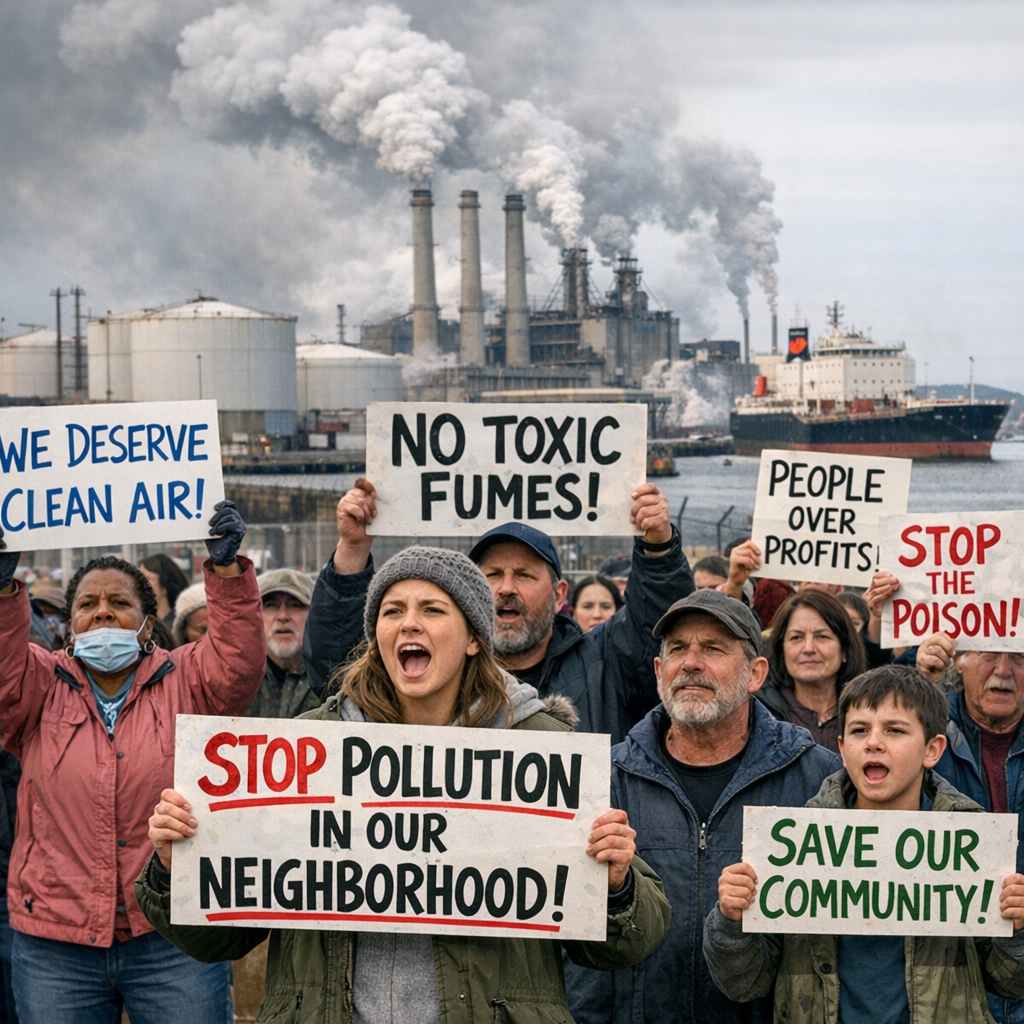
In the neighborhoods of South Providence and Washington Park, residents have long faced environmental challenges stemming from industrial activities along the Port of Providence. These communities, predominantly composed of people of color and low-income families, are now actively advocating for environmental justice to address these longstanding issues.
Community Concerns and Health Impacts
The proximity of these neighborhoods to the port has exposed residents to various pollutants, including emissions from diesel trucks, marine vessels, and industrial facilities. Studies have shown that these areas experience higher rates of asthma and other respiratory conditions compared to other parts of the city. The Rhode Island Department of Environmental Management’s Community Scale Air Toxics Monitoring Project highlighted elevated levels of air toxics in these communities, underscoring the need for targeted interventions.
Grassroots Mobilization
Local activists, such as Monica Huertas, have been at the forefront of efforts to combat pollution in the port area. Huertas, a mother of four residing near the port, has become an environmental advocate, working to raise awareness and push for policy changes. Community organizations are collaborating with researchers and policymakers to develop strategies that mitigate pollution and improve public health outcomes.
Policy and Regulatory Responses
In response to community advocacy, city officials have initiated measures to enhance code enforcement and support housing repairs in affected neighborhoods. The proposed city budget includes funding for additional code enforcement personnel and a revolving fund to assist landlords with necessary repairs, aiming to ensure safe and healthy living conditions for residents.
Looking Ahead
The concerted efforts of Providence’s port communities exemplify the power of grassroots activism in addressing environmental injustices. Continued collaboration between residents, advocacy groups, and government agencies is essential to create sustainable solutions that prioritize the health and well-being of all community members.